Special Needs Scouting
The Trail is for Everyone
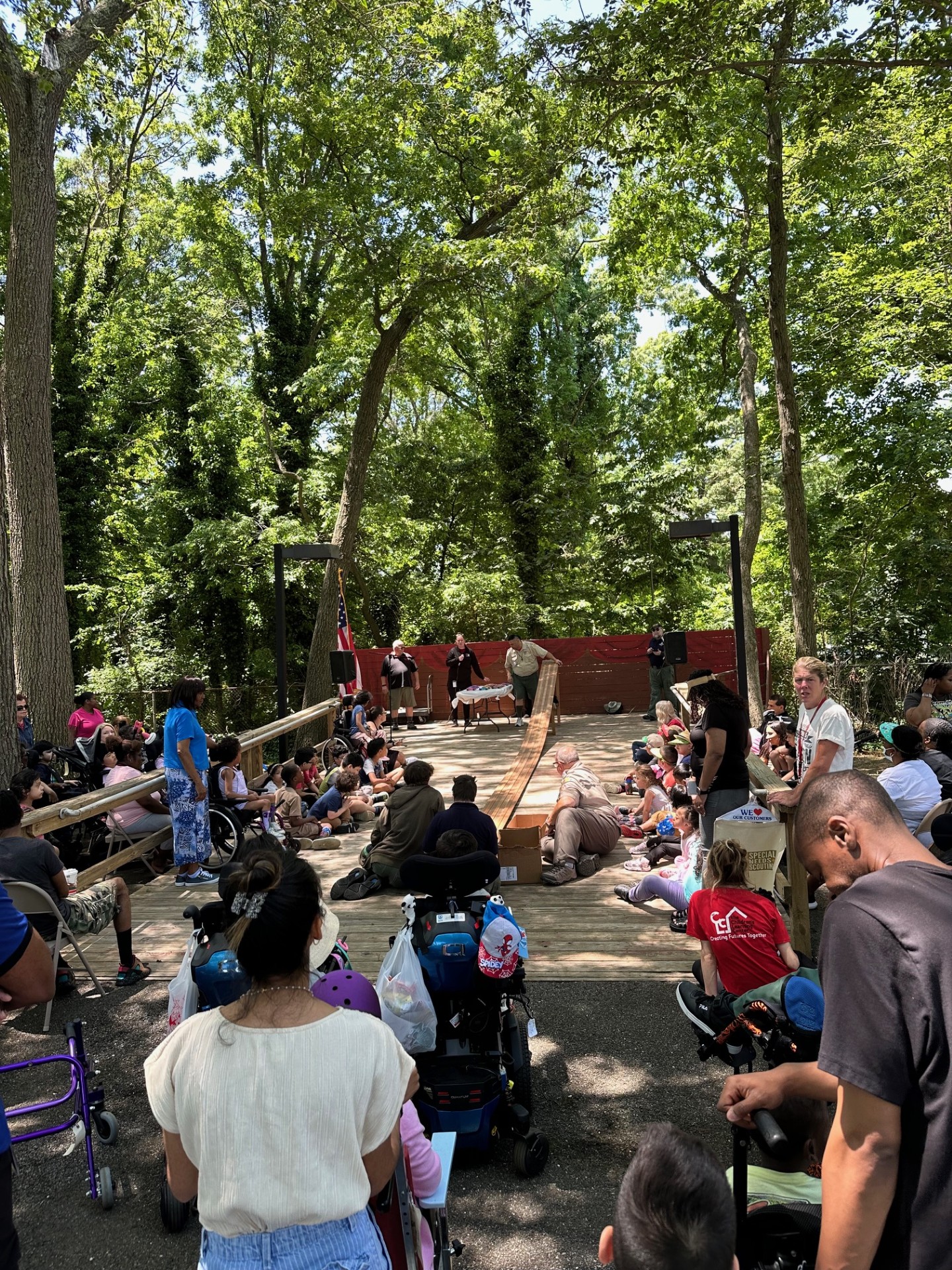
Scouting America Long Island is committed to making Scouting accessible and enjoyable to all Scouts, regardless of their abilities. Since its founding in 1910, the Scouting America has included fully participating members with physical, mental, and emotional disabilities. The BSA’s policy is to treat members with disabilities as much like other members as possible. It has been traditional, however, to make some accommodations in advancement if absolutely necessary. By adapting the environment and/or our instruction methods, most Scouts with disabilities can be successful in Scouting.
The basic premise of Scouting for youth with disabilities is full participation. Youth with disabilities can be treated and respected like every other member of their unit. They want to participate like other youth – and Scouting provides that opportunity.
Scout & Volunteer Resources
Advancement Resources
Council Resources
FAQs
Is Scouting inclusive of children with disabilities?
Yes! Scouting is committed to inclusivity and welcomes children of all abilities. Programs are designed to adapt to meet the needs of every child.
My child has a disability, how do they register?
There is no special registration process for Scouts with a disability or special need or procedure to collect such information. Youth with a permanent and severe disability that preclude typical advancement are welcome to continue in the Scouting program beyond the age of 18 (for Scouts BSA) and 21 (for Venturers). To apply, fill out the Registration Beyond the Age of Eligibility form and submit it to the Special Needs Scouting Chair.
Can I share a tent with my son or daughter who has special needs?
Youth and adults tent separately in the Scouts BSA, Sea Scouts, and Venturing programs. Youth who have a special need or disability who may require a parent or legal guardian to tent with them must develop a written plan in conjunction with the Scout Executive to address their specific needs.
My child takes medication. What is the policy on medications?
Taking prescription medication is the responsibility of the individual taking the medication and/or that individual’s parent or guardian. A leader, after obtaining all the necessary information, can agree to accept the responsibility of making sure a youth takes the necessary medication at the appropriate time, but Scouting America does not mandate or necessarily encourage the leader to do so.
Standards and policies regarding administration of medication may be in place at Scouting America camps. If state laws are more limiting than camp policies, they must be followed. The AHMR also allows for a parent or guardian to authorize the administration of nonprescription medication to a youth by a camp health officer or unit leader, including any noted exceptions.
What types of accommodations are available for Scouts with disabilities?
We’re committed to making scouting accessible for your child by tailoring activities and providing support as needed, all while keeping safety our top priority using the SAFE Checklist. This ensures we create a safe, fun, and engaging experience for your child.
How can my Scout work towards earning badges with their disability?
Scouting is designed for all Scouts to be able to achieve some advancement as it is one of the 8 methods of Scouting America. Open minded flexibility, Accommodations and even Modifications are allowed in Advancement following the Guide to Advancement
For more information, who should I contact?
Susana Isaacson – Special Needs Scouting Chair
oshoshana18@gmail.com
Robert Wolf – Staff Advisor
Robert.Wolf@Scouting.org

© 2026 Boy Scouts of America – All Rights Reserved.